Ashwagandha vs L Theanine: 5 Crucial Anxiety & Cortisol Differences (2026)
When comparing ashwagandha vs l theanine for managing high cortisol, chronic burnout, and acute anxiety spikes, understanding the distinct biochemical mechanisms between these two natural relaxants is essential for selecting the right neuro-calming protocol.
Executive Quick Answer: Ashwagandha vs L Theanine
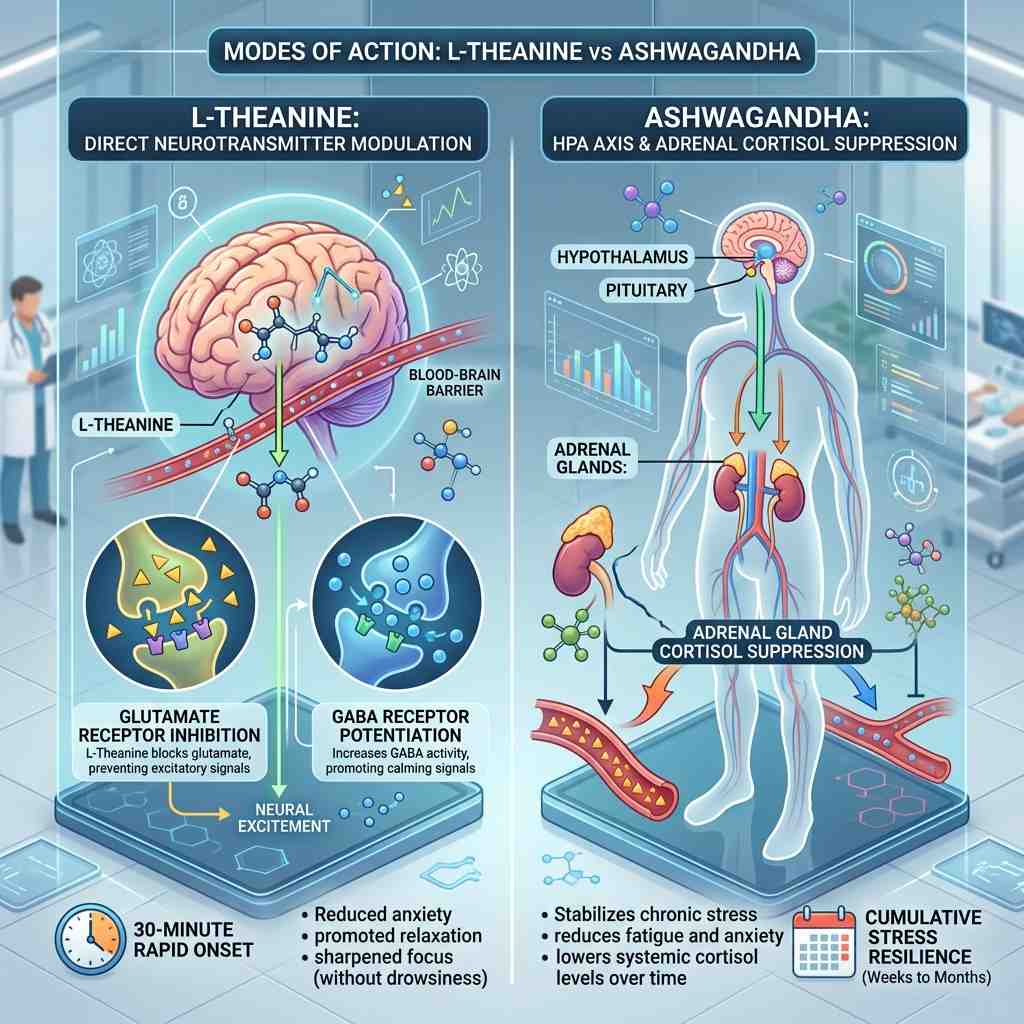
In the clinical comparison of ashwagandha vs l theanine, the primary difference lies in their speed of action and physiological targets. L-Theanine is a rapid-acting amino acid that crosses the blood-brain barrier within 30 minutes to antagonize glutamate receptors and induce calming alpha brainwaves (8–12 Hz) without sedation, making it ideal for acute situational panic and caffeine jitters. Conversely, in any evaluation of ashwagandha vs l theanine, Ashwagandha (Withania somnifera) is a cumulative botanical adaptogen that regulates the Hypothalamic-Pituitary-Adrenal (HPA) axis over 4 to 8 weeks, lowering serum cortisol levels by up to 28% to resolve systemic adrenal fatigue.
Table of Contents: Stress & Cortisol Decision Guide
- 1. Pharmacological Mechanisms: Neurotransmitter vs. Endocrine Pathways
- 2. Comprehensive Comparison Matrix: Ashwagandha vs L Theanine
- 3. Heart Rate Variability (HRV) & Vagal Tone Impact
- 4. Standardized Extract Protocols: KSM-66 vs. Sensoril vs. Shoden
- 5. Clinical Decision Framework: Acute Panic vs. Chronic Burnout
- 6. Can You Stack Ashwagandha and L-Theanine Together?
- 7. Frequently Asked Questions (FAQ)
1. Pharmacological Mechanisms: Neurotransmitter vs. Endocrine Pathways
To evaluate ashwagandha vs l theanine accurately, one must examine how each compound interacts with the human nervous system. While both reduce perceived stress, they operate on completely different biological axes indexed in medical literature on PubMed (National Institutes of Health):
- L-Theanine (Direct Central Neurotransmitter Modulator): Structurally analogous to L-glutamate, L-Theanine easily crosses the blood-brain barrier via neutral amino acid transporters. It acts as a low-affinity antagonist at NMDA and AMPA glutamate receptors, preventing excitatory neurotransmitter overdrive. Simultaneously, it increases gamma-aminobutyric acid (GABA) synthesis, generating alert relaxation and smooth mental focus within 30 to 45 minutes.
- Ashwagandha (Endocrine & HPA-Axis Adaptogen): Rich in steroidal lactones called withanolides (specifically Withaferin A and Withanolide D). When evaluating ashwagandha vs l theanine, Ashwagandha acts primarily on the hypothalamic-pituitary-adrenal (HPA) axis, sensitizing glucocorticoid receptors in the paraventricular nucleus and blunting excess Adrenocorticotropic Hormone (ACTH) release during chronic psychological stress.
To explore how adaptogenic relaxation compares across other herbal nootropics, read our foundational master guide on L-Theanine vs Ashwagandha for stress and cortisol.
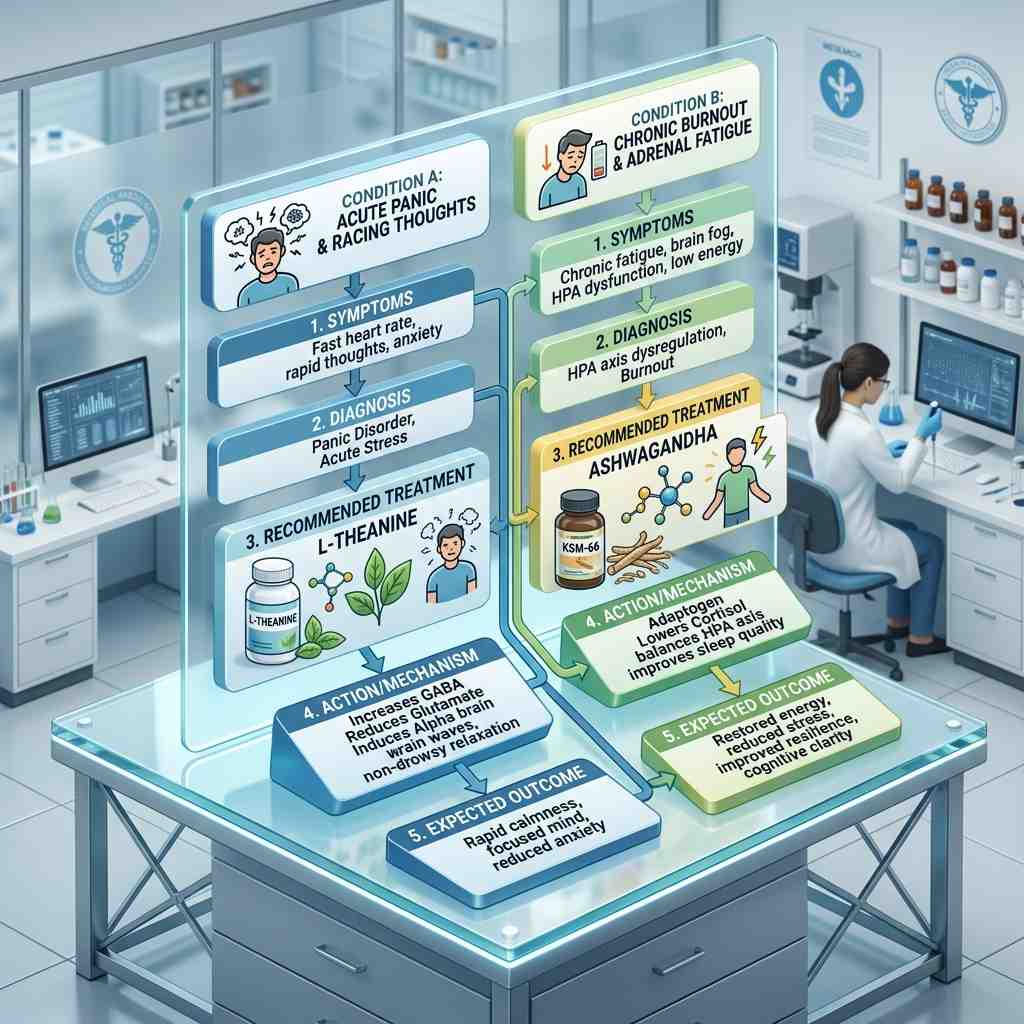
2. Comprehensive Comparison Matrix: Ashwagandha vs L Theanine
| Diagnostic Parameter | L-Theanine (Suntheanine®) | Ashwagandha (KSM-66® / Sensoril®) |
|---|---|---|
| Bioactive Classification | Non-proteinogenic amino acid (from Camellia sinensis) | Botanical adaptogen root extract (Withanolides) |
| Speed of Therapeutic Onset | Rapid (30–45 minutes) | Cumulative (14–30 days of daily use) |
| Primary Target System | Central GABA, Glutamate, Alpha Brainwaves (8–12 Hz) | Hypothalamic-Pituitary-Adrenal (HPA) Axis & Cortisol |
| Impact on Daytime Alertness | Sharpens focus; eliminates caffeine jitters without sedation | Promotes deep grounding calm; higher doses may cause mild lethargy |
| Cortisol Reduction Capability | Transient suppression during acute stress events | Significant long-term systemic reduction (~28% in trials) |
| Standard Clinical Dosage | 100 mg – 400 mg daily | 300 mg – 600 mg daily of standardized extract |
| Best Clinical Indication | Public speaking panic, caffeine sensitivity, task anxiety | Chronic work burnout, insomnia, elevated evening cortisol |
3. Heart Rate Variability (HRV) & Vagal Tone Impact
Biometric analysis of autonomic nervous system health reveals measurable physiological divergence between ashwagandha vs l theanine. Heart Rate Variability (HRV)—specifically Root Mean Square of Successive Differences (RMSSD)—serves as a non-invasive proxy for parasympathetic vagal activity:
- Acute HRV Elevation via L-Theanine: Within 40 minutes of consuming 200 mg of L-Theanine, high-frequency (HF) HRV power increases, blunting acute sympathetic tachycardia and lowering transient systolic blood pressure spikes during stressful cognitive tasks.
- Long-Term Autonomic Resilience via Ashwagandha: In 60-day clinical trials with chronically stressed adults, daily Ashwagandha supplementation significantly increased baseline 24-hour RMSSD scores, confirming enhanced physiological resilience against systemic inflammation and adrenal exhaustion.
4. Standardized Extract Protocols: KSM-66 vs. Sensoril vs. Shoden
When selecting Ashwagandha for clinical protocols, the extraction method dictates daytime vs. nighttime utility:
- KSM-66® (5% Withanolides from Root Only): Best for daytime stress resilience, athletic recovery, and maintaining cognitive clarity without sluggishness.
- Sensoril® (10% Withanolides from Root and Leaf): Highly potent with higher withanolide glycosides, making it ideal for nighttime cortisol blunting and deep relaxation.
- Shoden® (35% Withanolides): High-potency micro-dose extract (120 mg) providing maximum systemic cortisol modulation.
5. Clinical Decision Framework: When to Choose Which Compound
When to Choose L-Theanine
- Acute Situational Anxiety: 200 mg taken 30 minutes before high-stress presentations, exams, or social events to induce clean alpha-wave calmness.
- Caffeine Jitter Neutralization: Pair 200 mg L-Theanine with your morning espresso at a 2:1 ratio (Theanine:Caffeine) to eliminate peripheral tachycardia and vasoconstriction.
When to Choose Ashwagandha
- Chronic Adrenal Fatigue & Burnout: 300 mg KSM-66 twice daily with meals to reset dysregulated diurnal cortisol curves.
- Elevated Nighttime Cortisol & Insomnia: For adults who feel “wired and tired” at 11:00 PM due to evening cortisol spikes. Explore our dedicated protocol on Ashwagandha and L-Theanine for sleep architecture.
6. Can You Stack Ashwagandha and L-Theanine Together?
Yes. Because the two compounds operate via non-overlapping pathways (GABAergic amino acid neurotransmission vs. endocrine withanolide HPA modulation), taking both concurrently provides comprehensive, multi-tiered stress resilience:
- The Daytime Focus Stack: 200 mg L-Theanine + 300 mg KSM-66 Ashwagandha in the morning with breakfast. Provides immediate mental clarity while simultaneously buffering against cortisol accumulation.
- The Evening Restoration Stack: 200 mg L-Theanine + 300 mg Sensoril Ashwagandha 45 minutes before bed to accelerate sleep onset and prolong deep slow-wave sleep.
For high-performers seeking cholinergic focus synergy, explore our guide on taking Alpha GPC and Citicoline together.
At Brooklyn Health & Wellness, our integrative practitioners assess adrenal dysfunction, hormone metabolites, and neurotransmitter balance through functional Holistic Health Consultations.
7. Frequently Asked Questions (FAQ)
What is the key difference in ashwagandha vs l theanine?
In ashwagandha vs l theanine, L-Theanine works within 30 minutes to modulate brain GABA and glutamate for acute anxiety, while Ashwagandha requires 2 to 4 weeks to lower systemic adrenal cortisol levels.
Does L-Theanine make you drowsy during the day?
No. L-Theanine induces alpha brainwaves (8–12 Hz), which produce relaxed alertness and cognitive focus without sedative lethargy.
Can you take Ashwagandha on an empty stomach?
Ashwagandha is best taken with a meal containing dietary fats because its bioactive withanolides are fat-soluble and unextracted powders may cause mild stomach irritation if taken on an empty stomach.
Which is better for panic attacks: ashwagandha vs l theanine?
L-Theanine is significantly better for acute panic attacks due to its 30-minute rapid onset of central nervous system inhibition.