
Lion’s Mane Dosage for ADHD: 5 Proven Clinical Protocols (2026)
For adults and high-performers navigating attention deficit hyperactivity disorder, finding the optimal lion’s mane dosage for adhd is a critical step toward improving executive function, working memory, and sustained attention without the harsh crashes of synthetic stimulants.
Executive Quick Answer: What is the Optimal Lion’s Mane Dosage for ADHD?
The clinically validated lion’s mane dosage for adhd ranges between 1,000 mg and 3,000 mg daily of a standardized dual-extracted fruiting body and mycelium extract (containing minimum 25% to 30% beta-glucans and standardized hericenones/erinacines). Rather than forcibly dumping dopamine into the synaptic cleft like pharmaceutical amphetamines, the optimal lion’s mane dosage for adhd enhances Nerve Growth Factor (NGF) and Brain-Derived Neurotrophic Factor (BDNF) in the prefrontal cortex, strengthening neural connectivity and reducing cognitive impulsivity over time.
Table of Contents: ADHD Dosage & Neurobiology Guide
- 1. Neurobiology: How Lion’s Mane Modulates the ADHD Brain
- 2. 4-Week Clinical Dosage Titration Protocol
- 3. Lion’s Mane vs. Pharmaceutical Stimulant Focus Curves
- 4. The Gut-Brain-Dopamine Axis in Adult ADHD
- 5. Nootropic Synergy: Stacking Lion’s Mane for Focus
- 6. Frequently Asked Questions (FAQ)
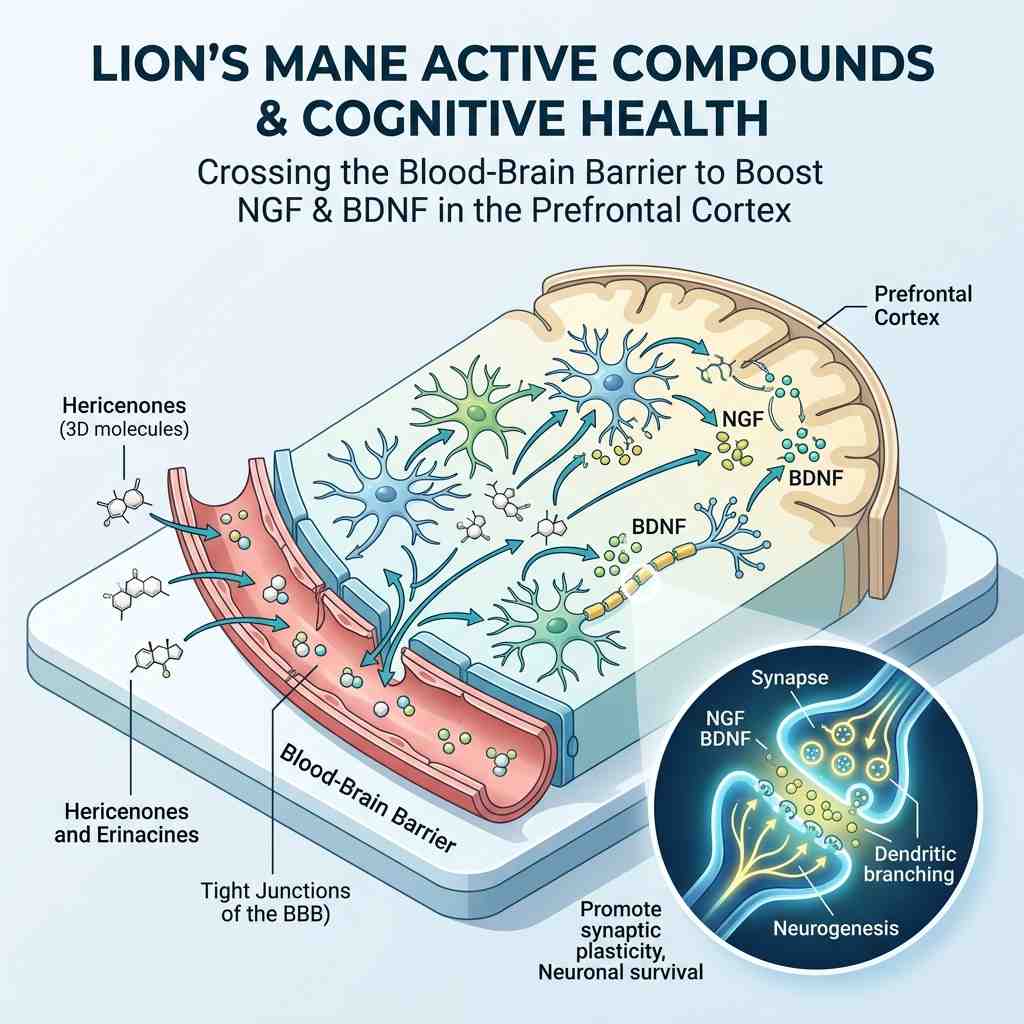
1. Neurobiology: How Lion’s Mane Modulates the ADHD Brain
To understand why calibrating the right lion’s mane dosage for adhd is so effective, one must look at the pathophysiology of the neurodivergent brain. Attention Deficit Hyperactivity Disorder is characterized by dysregulated dopamine transmission, impaired noradrenergic signaling, and under-activation in the prefrontal cortex (PFC)—the brain’s executive control center responsible for task prioritization, emotional regulation, and working memory.
According to clinical trials indexed on PubMed (National Institutes of Health), Hericium erinaceus contains two unique classes of lipophilic bioactive diterpenoids:
- Hericenones (Fruiting Body): Low-molecular-weight compounds that stimulate the peripheral synthesis of Nerve Growth Factor (NGF), a neuropeptide crucial for the survival, maintenance, and synaptic plasticity of cholinergic neurons.
- Erinacines (Mycelium): Potent cyathane diterpenoids that readily cross the blood-brain barrier to trigger central Brain-Derived Neurotrophic Factor (BDNF) transcription in the hippocampus and prefrontal cortex.
When you establish the correct lion’s mane dosage for adhd, these neurotrophic factors promote dendritic branching, improve synaptic transmission speed, and mitigate the micro-inflammatory neuro-fatigue common in adult ADHD.
To learn more about baseline mushroom extraction standards, read our cornerstone guide on Lion’s Mane Dosage for memory and neurogenesis.
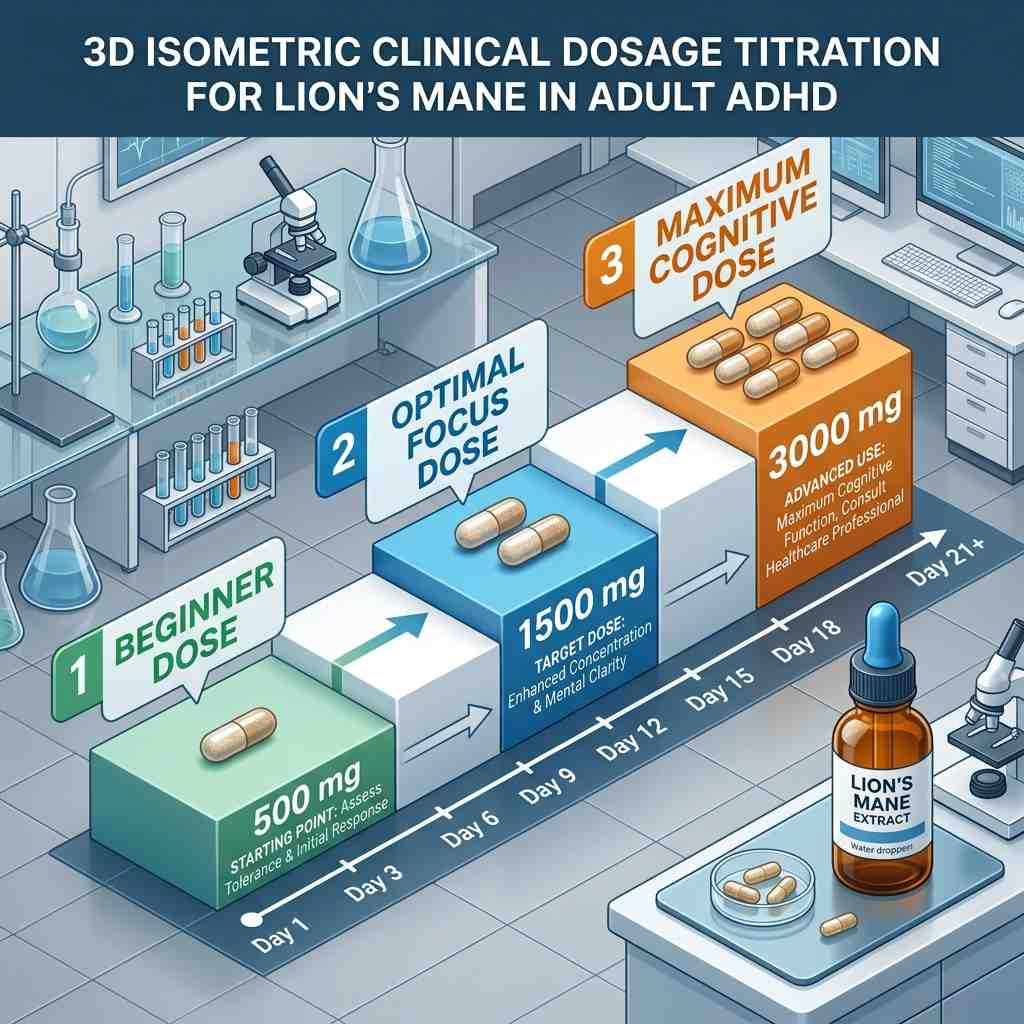
2. 4-Week Clinical Dosage Titration Protocol for Adult ADHD
Because neurotrophic mushrooms exert cumulative adaptogenic effects rather than instantaneous dopamine surges, jumping straight into high doses can occasionally cause mild sensory overload or vivid dreams. Clinical practitioners recommend a structured 4-week titration schedule:
Week 1: Tolerance & Micro-Assessment (500 mg Daily)
- Dosage: 500 mg standardized 8:1 or 10:1 extract taken with morning breakfast.
- Objective: Assess gastrointestinal tolerance, baseline nervous system response, and dream clarity.
Week 2: The Baseline Therapeutic Threshold (1,000 mg – 1,500 mg Daily)
- Dosage: 500 mg upon waking + 500 mg to 1,000 mg with mid-day lunch.
- Objective: Stabilize afternoon mental fatigue, enhance verbal fluency, and reduce task-switching friction.
Week 3 & 4: The Full Executive Performance Window (2,000 mg – 3,000 mg Daily)
- Dosage: 1,500 mg morning + 1,000 mg early afternoon (before 2:00 PM).
- Objective: Full neuroplastic support, deep work hyper-focus capability, and improved emotional resilience.
For individuals seeking to balance extract ratios between whole fruiting bodies and cultivated mycelium, explore our detailed breakdown on the recommended daily dose of lion’s mane.
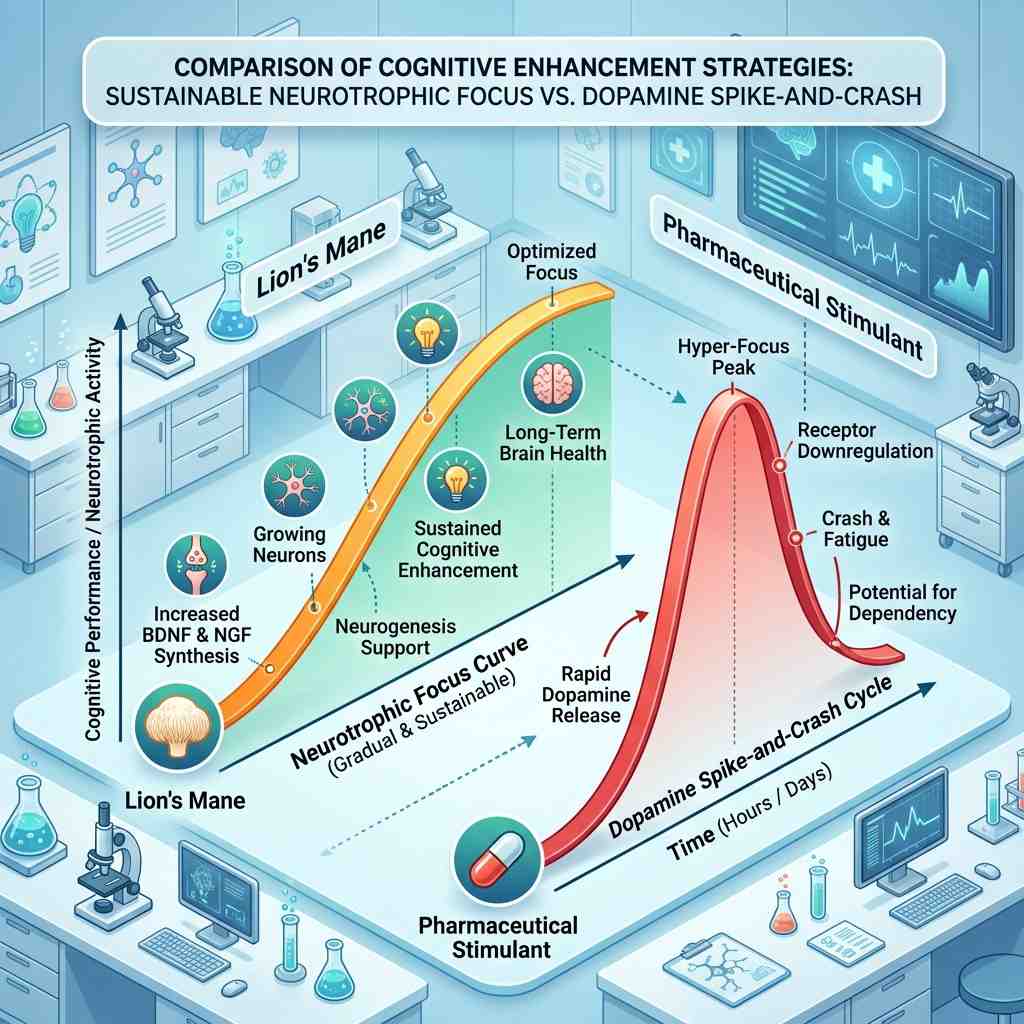
3. Lion’s Mane vs. Pharmaceutical Stimulants: Key Differences
| Functional Parameter | Lion’s Mane Extract (Hericium erinaceus) | Pharmaceutical Stimulants (e.g., Methylphenidate / Amphetamine) |
|---|---|---|
| Primary Mechanism | Stimulates endogenous NGF & BDNF neurogenesis | Blocks dopamine & norepinephrine reuptake |
| Onset of Action | Gradual, cumulative (7 to 21 days for full structural effect) | Immediate (30 to 60 minutes) |
| Crash & Rebound Fatigue | Zero crash; sustained baseline clarity | Common rebound fatigue, irritability, and anxiety |
| Cardiovascular Strain | None; supports parasympathetic tone | Elevates blood pressure and resting heart rate |
| Tolerance & Dependence | Zero physical dependence; no tolerance buildup | High risk of tolerance and receptor downregulation |
| Long-Term Neuroprotection | Repairs myelin sheaths and promotes synaptic density | Maintains symptomatic control without neurotrophic repair |
4. The Gut-Brain-Dopamine Axis in Adult ADHD
Recent gastrointestinal neurology reveals that up to 50% of the body’s dopamine and over 90% of serotonin are synthesized in the gut mucosal lining via enterochromaffin cells. In individuals with ADHD, intestinal dysbiosis and mucosal inflammation frequently impair neurotransmitter precursor absorption.
The prebiotic (1,3)(1,6)-beta-D-glucans within your daily lion’s mane dosage for adhd actively nourish beneficial commensal strains (such as Bifidobacterium and Lactobacillus), enhancing Short-Chain Fatty Acid (SCFA) production like butyrate. This dual neurological and microbiological mechanism reduces systemic inflammation, allowing dopamine precursors to reach the central nervous system with greater bioactivity.
5. Nootropic Synergy: Stacking Lion’s Mane for Adult Focus
To maximize the cognitive benefits of your lion’s mane dosage for adhd, integrative neuro-nutritionists frequently combine functional mushrooms with complementary cholinergic donors and adaptogens:
- The Cholinergic Amplifier (Alpha GPC / Citicoline): Pairing 1,500 mg Lion’s Mane with 150 mg Alpha GPC provides both the structural neurotrophic stimulation (BDNF) and the immediate acetylcholine fuel required for memory recall. Learn more about dual choline stacking in our guide on taking Alpha GPC and Citicoline together.
- The Calming Dopamine Modulator (L-Theanine): Taking 200 mg L-Theanine with your morning Lion’s Mane smooths out mental restlessness, eliminates background anxiety, and promotes alpha brainwave synchronization (8–12 Hz).
At Brooklyn Health & Wellness, our clinical practitioners evaluate adult attention struggles through functional neurotransmitter testing, gut-brain axis analysis, and tailored Holistic Health Consultations.
6. Frequently Asked Questions (FAQ)
What is the most effective lion’s mane dosage for adhd in adults?
The most effective clinical lion’s mane dosage for adhd is 1,000 mg to 2,000 mg daily of a standardized dual-extract taken in divided doses with breakfast and lunch.
How long does it take for Lion’s Mane to improve ADHD focus?
While subtle alertness may be noticed within 60 minutes, clinical improvements in working memory, task completion, and executive control typically emerge after 14 to 28 days of daily, consistent supplementation as neurotrophic pathways strengthen.
Can I take Lion’s Mane alongside prescription ADHD medication?
Many adults take Lion’s Mane alongside stimulant medications without adverse pharmacokinetic interactions. However, because Lion’s Mane enhances neural sensitivity, you should always consult your prescribing physician before combining supplements with prescription treatments.
Can Lion’s Mane cause insomnia if taken too late?
Yes. Because Lion’s Mane stimulates BDNF and increases cortical mental alertness, taking doses after 3:00 PM can cause heightened cognitive activity and interfere with natural sleep onset.