Citicoline vs Phosphatidylcholine: 5 Key Brain Repair Differences (2026)
When comparing citicoline vs phosphatidylcholine for brain cell membrane repair, memory enhancement, and neuroprotection, understanding their distinct metabolic pathways is essential.
Executive Quick Answer: Citicoline vs Phosphatidylcholine
In the clinical evaluation of citicoline vs phosphatidylcholine, Citicoline (CDP-Choline) is a vastly more targeted, bioenergetically active brain-repair supplement. While Phosphatidylcholine (lecithin) serves as a broad structural dietary fat primarily utilized for liver cell walls and bile flow, Citicoline acts as the direct rate-limiting intermediate in the Kennedy Pathway. Citicoline delivers cytidine (which converts to uridine) and choline directly across the blood-brain barrier, accelerating neuronal membrane regeneration and increasing frontal cortex ATP by ~14%.
Table of Contents: Membrane Repair Guide
- 1. The Kennedy Pathway: Biochemistry of Brain Repair
- 2. Direct Comparison Matrix: Citicoline vs Phosphatidylcholine
- 3. The Uridine & Dopamine D2 Receptor Advantage
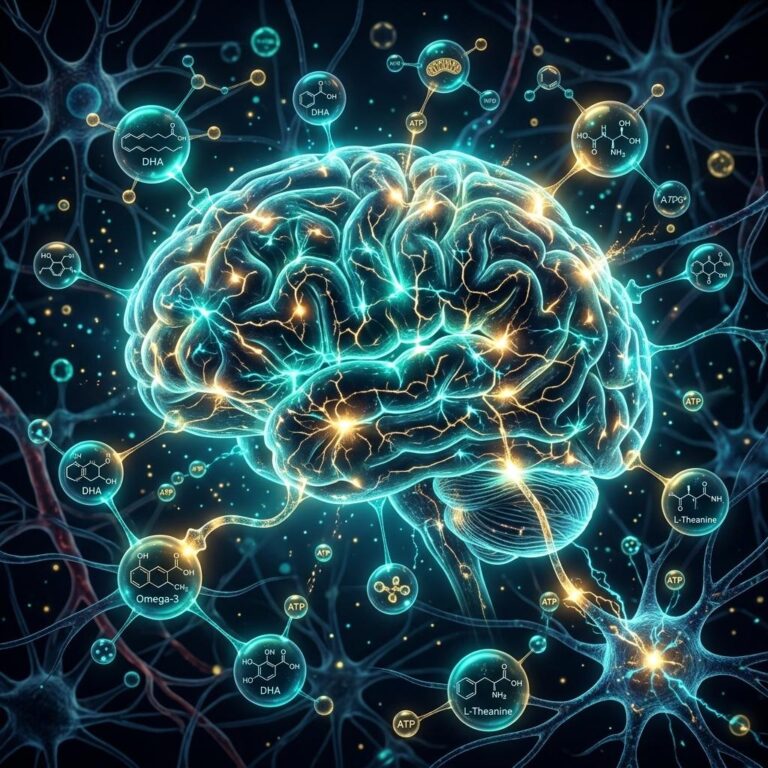
- 4. DHA & Omega-3 Synergy for Remyelination
- 5. Clinical Protocols & Supplement Selection
- 6. Frequently Asked Questions (FAQ)
1. The Kennedy Pathway: Citicoline vs Phosphatidylcholine Synthesis
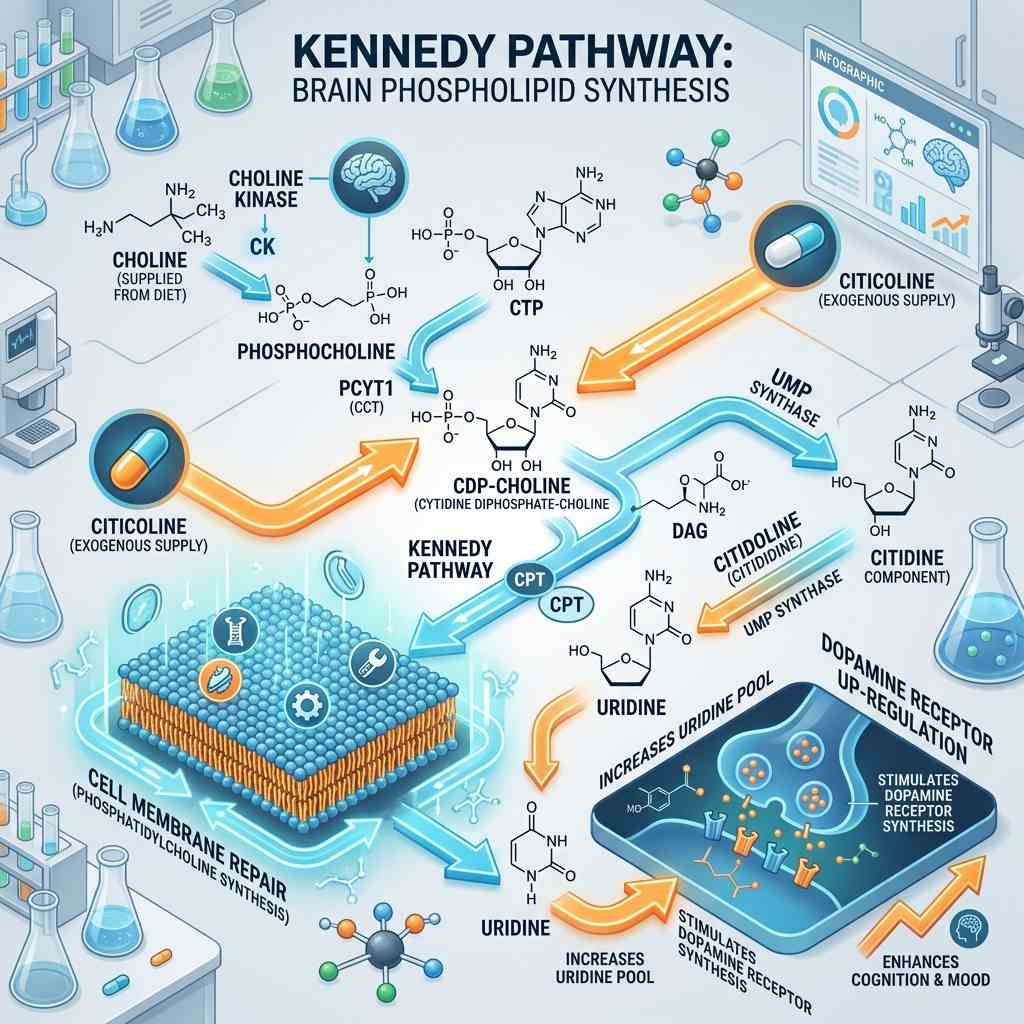
To understand the biological difference in citicoline vs phosphatidylcholine, one must examine the intracellular biochemistry of the Kennedy Pathway (Cytidine Diphosphate-Choline Pathway), documented in neurochemistry literature on PubMed (NIH):
- Step 1 (Choline Phosphorylation): Dietary choline is phosphorylated into phosphocholine.
- Step 2 (The Rate-Limiting Bottleneck): Phosphocholine reacts with cytidine triphosphate (CTP) catalyzed by CTP:phosphocholine cytidylyltransferase (CCT) to form CDP-Choline. This is the slowest, most bottlenecked step in brain membrane maintenance.
- Step 3 (Phosphatidylcholine Assembly): CDP-Choline transfers its phosphocholine group to diacylglycerol (DAG), synthesizing structural Phosphatidylcholine.
The Citicoline Advantage: Supplementing with Citicoline provides pre-formed CDP-Choline directly to brain neurons, bypassing the rate-limiting bottleneck. In contrast, dietary Phosphatidylcholine lecithin must be broken down by gut enzymes into free fatty acids, leaving the brain reliant on its slow endogenous synthesis machinery.
To learn how Citicoline compares to rapid-acting cholinergic precursors, read our core analysis on Alpha GPC vs Citicoline for mental clarity.
2. Direct Comparison Matrix: Citicoline vs Phosphatidylcholine
| Pharmacological Parameter | Citicoline (CDP-Choline / Cognizin®) | Phosphatidylcholine (Lecithin Form) |
|---|---|---|
| Biochemical Function | Rate-limiting regulatory intermediate in PC synthesis | End-product structural membrane phospholipid |
| Key Bioactive Metabolites | Choline + Cytidine (Uridine Precursor) | Choline + Glycerol + Fatty Acids |
| Brain Bioenergetics & ATP | Increases frontal lobe ATP and phosphocreatine by ~14% | No direct documented impact on cerebral ATP |
| Dopamine Receptor Modulation | Upregulates dopamine D2 receptor density via uridine | No documented modulation of dopamine receptors |
| Blood-Brain Barrier Uptake | High (Rapid absorption via nucleoside transporters) | Low-to-Moderate (Requires lymphatic digestion) |
| Primary Clinical Indication | Neuro-recovery, post-stroke rehab, focus, brain fog | Liver detoxification, gallbladder support, lipid transport |
3. The Uridine & Dopamine Advantage: Cytidine Bioconversion
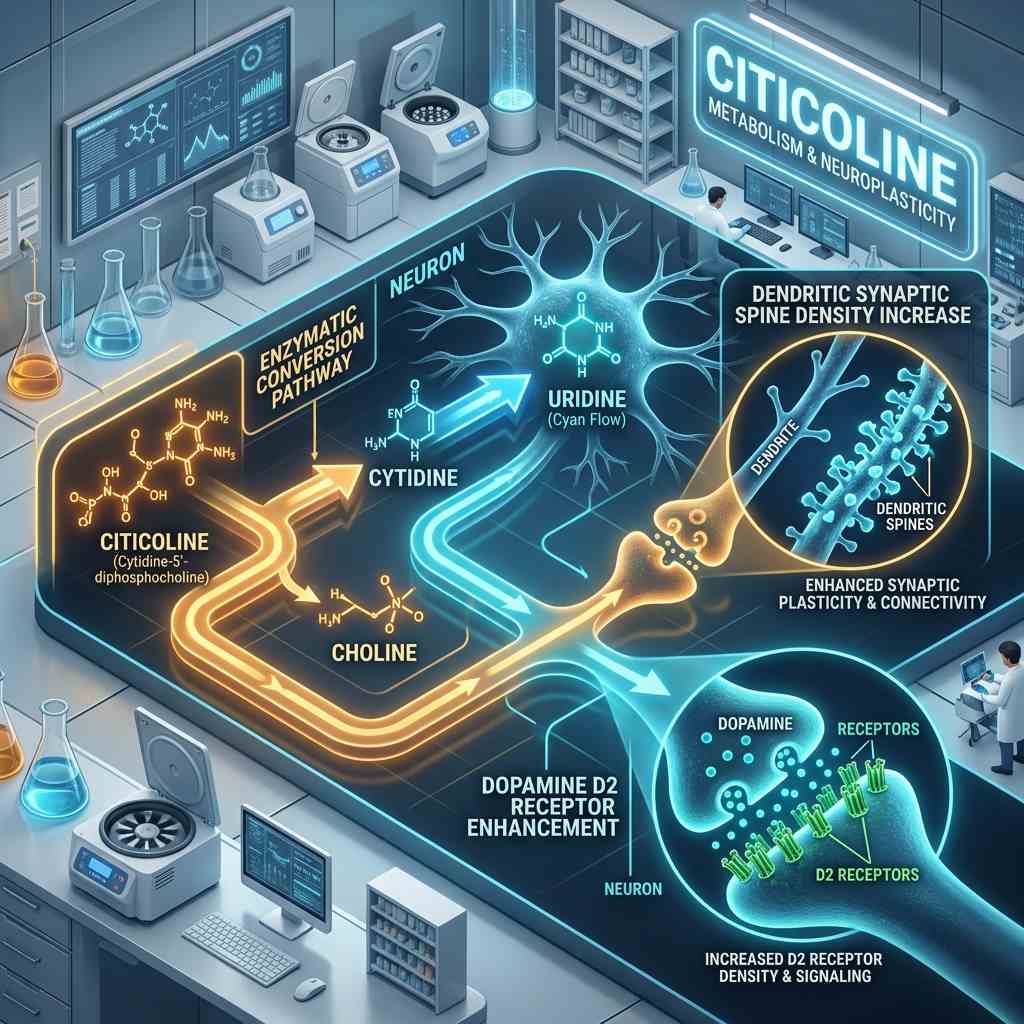
The definitive factor in citicoline vs phosphatidylcholine is Cytidine-to-Uridine bioconversion:
- Synaptic Density & Dendritic Spines: Circulating uridine crosses the blood-brain barrier to stimulate P2Y2 receptors, multiplying synaptic dendritic spine density and neurite branching.
- Dopaminergic System Restoration: Citicoline enhances striatal dopamine release and upregulates dopamine D2 receptor density, reversing cognitive burnout.
- Frontal Cortex Bioenergetics: Magnetic Resonance Spectroscopy (MRS) studies at Harvard Medical School revealed that 500 mg daily of Citicoline increased frontal lobe bioenergetics by 14%.
For individuals designing comprehensive cognitive stacks, combining Citicoline with rapid acetylcholine donors is detailed in our guide on taking Alpha GPC and Citicoline together.
4. DHA & Omega-3 Synergy for Neural Recovery
Under the landmark Wurtman Consortium Protocol at MIT, researchers discovered that pairing Citicoline with 1,000 mg of Docosahexaenoic Acid (DHA) accelerates neurite outgrowth by up to 300% compared to monotherapy. This combination provides the essential structural lipid components required for repairing damaged axonal myelin sheaths.
5. Clinical Protocols & Supplement Selection
When to Choose Citicoline (CDP-Choline)
- Clinical Focus: Eliminating executive brain fog, post-concussion recovery, improving visual attention, and restoring memory recall. Dosage: 250 mg to 500 mg daily in the morning with food (Cognizin®).
When to Choose Phosphatidylcholine (Lecithin)
- Hepatic & Digestive Focus: Fatty liver management, supporting gallbladder bile flow, and gut mucosal barrier integrity. Dosage: 1,200 mg to 2,400 mg daily of sunflower-derived phosphatidylcholine.
At Brooklyn Health & Wellness, our integrative practitioners evaluate neurochemical health, inflammatory markers, and cellular membrane integrity through comprehensive Holistic Health Consultations.
6. Frequently Asked Questions (FAQ)
What is the main difference in citicoline vs phosphatidylcholine?
In citicoline vs phosphatidylcholine, Citicoline supplies cytidine and choline directly into the central nervous system to synthesize brain cell membranes, whereas Phosphatidylcholine is a dietary fat primarily utilized by the liver and digestion.
Does Citicoline increase dopamine and focus?
Yes. By generating uridine, Citicoline upregulates dopamine D2 receptor density, stimulates dendritic spine formation, and increases frontal lobe ATP bioenergetics by ~14%.
Can you take Phosphatidylcholine and Citicoline together?
Yes. Phosphatidylcholine supports peripheral cell health and bile flow, while Citicoline targets central nervous system membrane dynamics and dopamine signaling.